|
| Monarch on swamp milkweed |
I hadn't planned on creating a
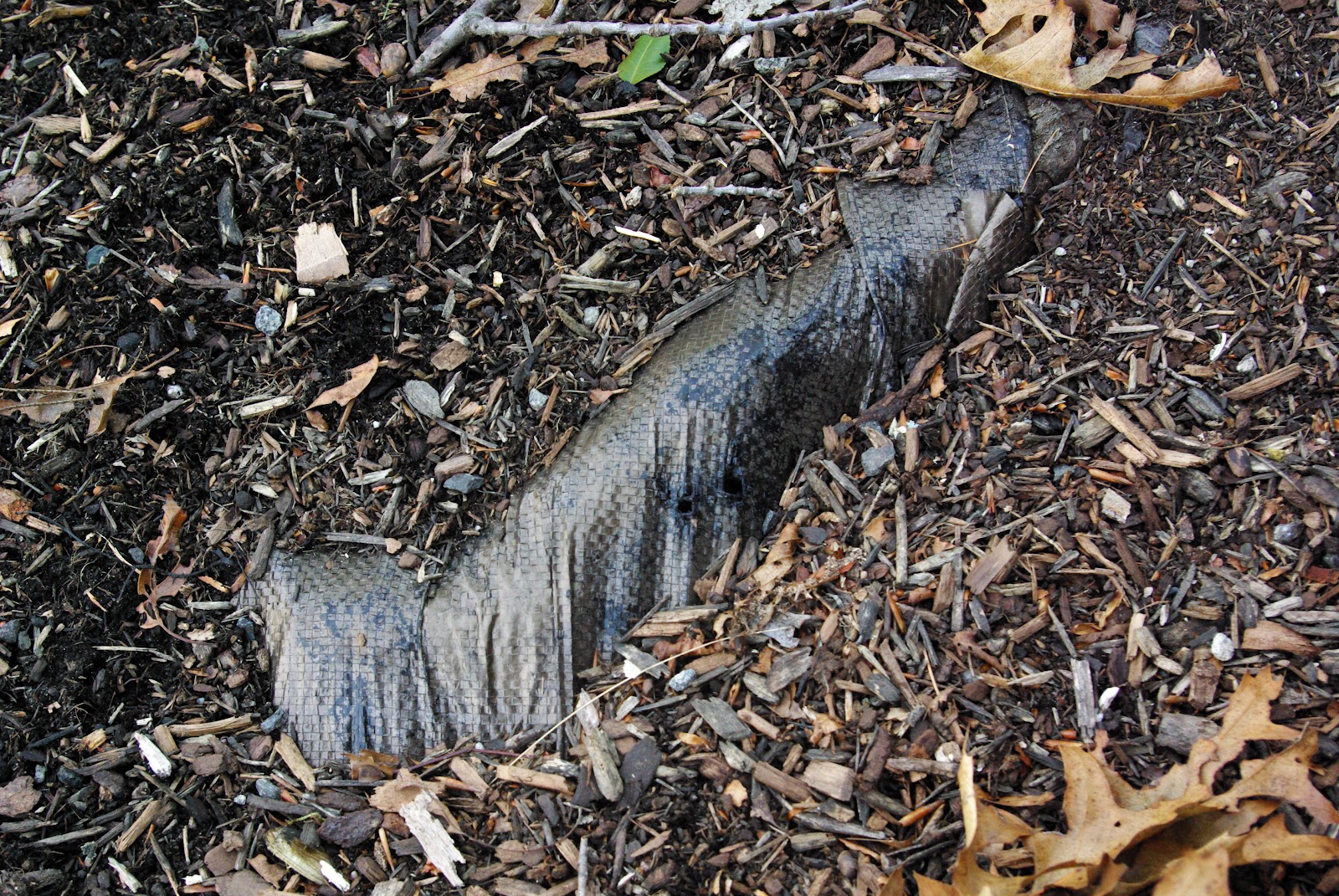
monarch waystation. Last weekend I rescued a few daylilies from the backyard where our fence was going in and quickly stuck them in a sunny spot near our mailbox, and I hit more plastic. This is an area of the yard that I hadn't planned on landscaping this summer, it's a border of dense beach roses (
Rosa rugosa) where the rest of the yard was just bare mulch. At least it had plants, so it could wait. And I assumed since it had plants there wasn't any plastic sheeting, I was wrong.
Of course I couldn't leave the plastic in and in tearing it out I discovered all the plants in this area, including the four foot high beach roses, were growing
on top of the plastic. In getting out the plastic I ended up taking out a lot of the beach roses and suddenly had a nice patch of empty, sunny dirt.
 |
| Monarch on butterflyweed |
That night I read an article in the summer edition of Country Gardens entitled "Of Milkweeds and Monarchs" (if I could find it online I would include the link) and its message about declining monarchs really struck home. The article sites many facts from
monarchwatch.org, and I instantly went online and poured over their website. Simply put, monarch butterflies are in crisis for the following reasons:
- Roundup resistant crops now dominate the midwest, meaning about 100 million acres of corn and beans are now sprayed with the glyphosate, creating milkweed-free fields. Monarchs making their way from the north to overwinter in Mexico now navigate a 1000 mile near-nectarless, flowerless, waterless landscape from Kansas through Oklahoma, Texas and into northern Mexico.
- Development of subdivisions, shopping centers, etc. now tops 6,000 acres a day. That's 2.2 million acres a year where there was often milkweed and other butterfly supporting plants.
- Roadside management practices of mowing and herbicides now often creates monocultures of grass, not native wildflowers.
- Illegal logging in the monarch's wintering forest in Mexico has diminished their former 23 acre habitat to a mere 5.
 |
| Monarch on blazing star (Liatris) |
It was clear what I had to do. That nice, newly-cleared and plastic-free sunny patch was destined to be a
monarch waystation (places that provide resources necessary for monarchs to produce successive generations and sustain their migration). In fact, the whole yard could qualify. I already planted nectar plants like blanket flower, sedum, beesbalm, blazing star and black eyed susans. I started a milkweed strain called butterflyweed (
Asclepias tuberosa) from seeds this winter and they're about 4 inches tall now and will be amazing in a few years. I just needed at least one more milkweed species to qualify as a certified "monarch waystation" with monarchwatch.org.

A few days ago I went out and purchased swamp milkweed (
Asclepias incarnata) and tomorrow a friend with a farm in Rowley is letting me take a few common milkweed plants (
A. syriaca) from his unmown fields and then I will have all three species of native milkweed. Where there was once a monoculture of introduced beach rose there will now be milkweed, blanket flower,
blazing star, yarrow, echinacea, cardinalflower, and Joe-pye weed. My three-year-old is now eagerly awaiting the appearance of those stunning little yellow and black caterpillars. She's already learned all about monarchs in her preschool and told me one day last fall that she just couldn't eat lunch because she was a monarch and was busy migrating to Mexico. I thought for her sake I would
certify our new monarch waystation with monarchwatch and she could proudly display this sign.
As far as I can tell from the
International Monarch Waystation Registry our waystation is the first certified in Ipswich, MA. I sure hope it's not the last. Stay tuned for photos of the finished, and flowering, monarch waystation.